


In today’s world, a growing number of Americans say they want to leave the United States permanently. Much of this conversation has revealed itself in lengthy online forums, where one sentence appears again and again: “I want to leave the US.” This highlights a significant truth behind it: Once what was promoted as the American Dream has given way to a search for stability, safety, and quality of life beyond borders.
As this historic shift reshapes migration patterns across the US, many Americans have turned their faces to the best places to live in Europe over the last few years. Accordingly, the popular European countries include the UK, Germany, Spain, France, Italy, and the Netherlands, and many Americans call them “home” nowadays. In this article, we will list the top 10 best places to live in Europe as an American
What You Will Find in This Article
Why American Expats Decide to Leave the US?
The rising number of Americans leaving the US has highlighted not only the fall of the “American Dream” but also critical issues within the system itself. At Get Golden Visa, we have been firm followers of this trend since 2022, as we have seen an increase in queries from the US about investment migration opportunities and have helped many relocate since then. That’s why we have been investigating the reasons that push many to move abroad.
According to our latest report, The Great American Exodus Re-Visit in 2024, what we have observed is that this movement is rarely driven by a single factor. Instead, it’s the accumulation of economic pressure, political uncertainty, and a growing desire for long-term stability.
Many factors lead individuals and families to explore residency or citizenship options elsewhere. Resulting in, global mobility is no longer a luxury; it has become a strategic decision not just for you but for your future generations.
1. High Cost of Living
Over the last few years, it has become harder and harder for Americans to cover their basic life needs. While wages have increased by a little over 20% since 2020, core costs tell a different story:
- Food prices are up roughly a quarter
- Housing expenses have climbed close to 30%
- Energy costs have risen by more than 40%
Today, over half of US households report living paycheck to paycheck, despite being fully employed. At the same time, income taxes and overall tax burdens continue to absorb a significant share of US citizens’ earnings. As a result, many find themselves working more, earning more on paper, yet keeping less in practice.
Considering this landscape, relocation is no longer driven by lifestyle aspirations; it is increasingly a pragmatic response to an economic reality.
2. Quality of Life
For many Americans moving from the US to Europe, the cost of achieving long-term stability has expanded far beyond what income growth has delivered. Over the past two decades, the resources required to maintain even a minimal standard of economic security have risen at nearly twice the pace of traditional inflation measures.
During the same period, inflation-adjusted earnings for low- and middle-income households have remained largely flat. This has created a structural gap between economic participation and economic reward, resulting in the fall of the American Dream. Therefore, many feel no longer safe or experience a high quality of life, even though they have employment and financial independence.
3. Healthcare Costs
Healthcare affordability is another major force reshaping how Americans think about their future. Nearly half of US adults say it is difficult to afford their healthcare costs, and about three in ten report they or a family member had trouble paying for care in the past year.
Many individuals delay or skip needed medical services, and roughly one-third have postponed care because of cost, as they worry most about medical expenses and unexpected bills.
On the other hand, medical debt remains pervasive. Roughly four in ten adults carry debt from medical or dental bills.
4. Social & Political Unrest
Many Americans are worried about political and social stability. A recent Pew survey shows that 85% of adults think politically motivated violence is increasing. People also point to growing polarization and extreme rhetoric as major concerns.
Considering this, it is clear to see that these worries affect Americans’ everyday lives and make the future unpredictable.
What Makes Europe So Appealing to Americans?
Many European countries offer the stability and security that Americans are searching for. Below, you will see the key points why they prefer Europe most.
1. Rich Cultural Life
Europe is home to centuries of art, history, and architecture, giving residents endless opportunities to explore. Most cities offer world-class museums, theaters, and music festivals. Apart from this, local traditions and culinary diversity make daily life vibrant and engaging for American expats.
2. High Quality of Life
Most European countries consistently rank high for healthcare, education, and environmental quality. Public services are generally reliable and accessible. On the other hand, safety, clean infrastructure, and community support add to residents’ overall well-being.
3. Healthy Work-Life Balance
European work culture often prioritizes personal time and vacation. Shorter workweeks, generous leave policies, and flexible schedules help many avoid burnout. Therefore, Americans moving to Europe for job opportunities can experience a healthier work-life balance, leaving time for family, hobbies, and travel.
4. Lower Cost of Living
In certain European countries, everyday expenses such as groceries, healthcare, and transportation are often significantly lower than in the US. Housing costs are often more predictable and offer affordable living.
5. Political Stability
Many Europeans enjoy long-standing political systems with transparent governance and low levels of social unrest. This predictability appeals to Americans seeking a sense of safety and security for their families and investments.
6. International Schools for Families with Children
Education is a top priority for families with children moving from the US. In this regard, Europe offers a wide network of international schools that offer global curricula such as IB or British programs. So that their children can continue their education smoothly and prepare them for opportunities worldwide.
7. Multiple Residency Options
For relocation, Americans typically need a long-term visa or residency permit, as they can stay only 90 days in 180 days without a visa. In terms of this, many EU countries offer multiple visa options:
- Student Visas
- Work Visas
- Digital Nomad Visas
- Retirement Visas (Passive Income)
- Golden Visa Programs for Investors
8. Tax Incentives
Several European countries offer tax benefits to attract foreign residents, retirees, and investors. These may include:
- Reduced rates for passive income
- Exemptions on foreign earnings
- Investor incentives
These incentives can make relocation more financially attractive and sustainable, along with low taxes compared to the US.
Which European Countries American Expats Prefer the Most?
According to the World Population Review’s latest data, American expats mostly live in the following countries, as shown in the table.
| Rank | Country | American Expats |
|---|---|---|
| 1 | United Kingdom | 243,570 |
| 2 | Germany | 152,501 |
| 3 | Spain | 68,613 |
| 4 | France | 59,171 |
| 5 | Italy | 50,957 |
| 6 | Netherlands | 43,208 |
| 7 | Switzerland | 42,809 |
| 8 | Ireland | 36,363 |
| 10 | Poland | 29,646 |
| 11 | Sweden | 26,172 |
| 12 | Greece | 24,748 |
| 13 | Norway | 20,746 |
| 14 | Belgium | 16,645 |
| 15 | Denmark | 16,584 |
| 16 | Austria | 14,035 |
| 17 | Hungary | 11,044 |
| 18 | Romania | 9,431 |
| 19 | Portugal | 8,977 |
| 20 | Finland | 6,410 |
| 21 | Malta | 6,313 |
| 22 | Bulgaria | 4,750 |
| 23 | Iceland | 3,932 |
| 24 | Luxembourg | 3,433 |
| 25 | Cyprus | 3,355 |
Top 10 Best European Countries to Live in Europe for Americans
Now that we covered what is pushing Americans to leave the US and what is driving them to Europe, it is time to move on to the top 10 best places to live in Europe as an American.

1. The United Kingdom: No Language Barrier
Located in Western Europe, the UK has become the top destination for Americans, with approximately 243,570 expats. As English is the primary language, Americans do not experience any language barrier here. Therefore, they can easily integrate themselves into the daily lives of the British people and find job opportunities. There is also a diverse and large expatriate population in cities like London, Manchester, and Edinburgh.
In terms of healthcare services, if you become a legal resident, you can benefit from the National Health Service (NHS) and get access to free healthcare in the UK, making it one of the best healthcare systems. They can also opt for private ones through private insurance to avoid longer waiting times.
Education is another strong pull factor for individuals and families relocating to the UK. Its system offers a wide range of high-quality educational options, from local state schools to international schools that follow American, IB, or British curricula. Additionally, Americans can take advantage of a variety of residency pathways, including work visas, student visas, investor programs, and family visas, to facilitate a smooth relocation.

2. Germany: Ideal for Families
For Americans planning long-term relocation, Germany, located in central Europe, offers excellent education, healthcare, and a structured, family-friendly environment. It provides a landscape with well-developed infrastructure, public services, and organized social systems, along with a low cost of living. This systematic order in everyday life reduces anxiety for many. That’s why many expats, not just Americans, prefer this country to relocate to. In cities like Berlin and Frankfurt, you can see many expat networks and social groups that help newcomers adapt quickly.
As having one of the world’s best education systems, Germany offers excellent public schools and higher education opportunities for many international students. Therefore, families moving from the US to Europe can ensure a smooth transition and global career opportunities for their children.
On the other hand, Germany’s healthcare system ranks at the top in Europe, providing its residents with affordable healthcare services through their health insurance. When it comes to visa options, you can go for one of the following:
- Employment Visa / EU Blue Card
- Job Seeker Visa
- Student Visa
- Family Reunification Visa
- Freelancer or Self-Employment Visa
- Researcher and Academic Visa
- Retirement and Other Stay Permits
- Germany Investment Visa

3. Spain: Sun, Lifestyle & Affordability
For around 68,613 American expats, Spain has become a central destination with its sunny Mediterranean climate, a relaxed lifestyle, and affordability. They can enjoy the beaches, outdoor dining, and the active expat community in Barcelona, as well as in Valencia, Málaga, and Madrid. Many know how to speak English, but as you move away from big cities, the likelihood declines. Also, compared with many Western European countries, the cost of living in Spain is relatively low, especially for housing, groceries, and public transport.
In terms of social services, you can access high-quality healthcare, which is often free and available to all legal residents. You can also opt for private health insurance and benefit from its private healthcare system. On the other hand, the education system offers both public and private international schools mainly in larger cities. Tuition fees are considerably lower than in the US.
If you want to live in Spain for more than 90 days, you must apply for a long-stay residency permit. In terms of this, you can benefit from the Spain Digital Nomad Visa for remote workers and the Spain Non-Lucrative Visa for retirees. There used to be a Spain Golden Visa, but it is no longer available.

4. France: Cultural Sophistication
When someone speaks of France, many think of the cultural sophistication shaped by its great thinkers and artists. In this respect, Americans are drawn to France for its rich cultural heritage. A better quality of life, affordable healthcare, excellent food, and a strong work-life balance are also a plus. Therefore, mainly retirees, freelancers, and families prefer to live in.
Although there is a strong language barrier between locals and foreigners, especially in smaller regions, you can also contact expat communities in major cities and get English-speaking job opportunities with a better work-life balance. When it comes to healthcare coverage, you can see that healthcare is often affordable and high-quality. In terms of education, France provides a strong public school system and affordable higher education.
If you are thinking about living in Europe as an American, you can relocate to France via the following residency options, depending on your intentions:
- Long-stay visa
- Carte de séjour
- Carte de résidence
5. Italy: Vibrant Culture
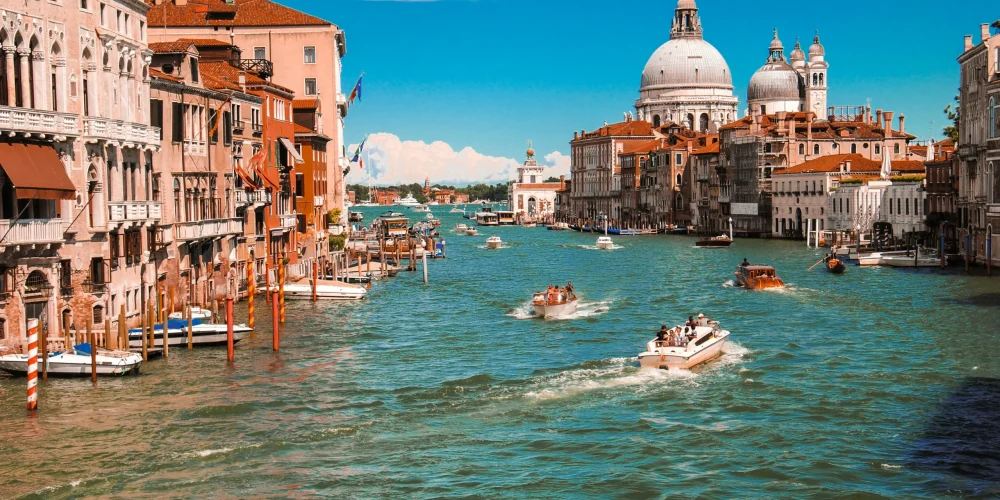
Located in Southern Europe, Italy attracts Americans with its rich history, world-renowned cuisine, and strong cultural traditions. You can see modern facilities, reliable public services, and access to excellent healthcare in European cities like Rome, Milan, and Florence. If you want to relocate to Italy with your family, you can access international and local schools in these regions. On the other hand, you can expect a slower pace of life and more affordable living in smaller towns.
As an American expat, you can also benefit from Italy’s well-established communities and professional networks for easy integration.
When it comes to relocation opportunities, Italy has multiple visa options, including work, student, and retirement visas. The Italian Golden Visa program is especially popular among Americans seeking residency through investment, with a minimum investment of €250,000. It allows investors and their families to live in Italy while benefiting from a flat tax of €300,000 per year on their foreign income.
So, they do not pay taxes on foreign income if they become legal residents. There is also an Italian Digital Nomad Visa for remote workers and an Elective Residence Visa for passive income earners.

6. Portugal: Cheapest Country with Easy Relocation Options
With 365 days of sunshine, Portugal has become one of the most attractive destinations for American expats seeking a slower, more balanced lifestyle. Beyond the weather, it offers a high quality of life with reliable healthcare, international education opportunities, strong public services, and a safe, politically stable environment.
The cost of living in Portugal is generally lower than in many other Western European countries, particularly for housing, transportation, and day-to-day expenses. Plus, life here is lively as Portuguese people know how to enjoy life. Vibrant expat communities, cultural festivals, and a friendly, welcoming population make integration easier and provide social support for newcomers.
For Americans considering long-term relocation, Portugal offers a variety of visa and residency options tailored to different needs. Among these, the Portugal Golden Visa program provides a pathway to residency for investors and their families, starting from an investment of €500,000 or a donation of €250,000. Under this scheme, investors can gain permanent residency after 5 years and citizenship after 10 years*, subject to the current citizenship law regulations at the time of application. There are also Portugal D7 Visas for retirees and D8 Visas for digital nomads, offering long-term residency in Portugal.
*Portuguese citizenship eligibility, timelines, and naturalization requirements are governed by nationality law and related legal interpretation, which are separate from the Golden Visa residency framework. This content is provided for informational purposes only and reflects the information available at the time of publication. It should not be construed as legal advice or as a guarantee of eligibility, approval, processing timeline, or future citizenship outcome. Laws, regulations, administrative practices and legal interpretations may evolve over time, and applicants should consult a qualified legal advisor to understand the implications of any current or potential regulatory changes before making decisions.

7. Netherlands: Ideal for Digital Nomads
Many Americans are drawn to the Netherlands because of its strong emphasis on work-life balance. Compared to the heavy work culture in the United States, you can enjoy standard 40-hour workweeks, generous paid vacation time, and well-protected sick leave, allowing you to keep the work-life balance.
Another aspect that makes the Netherlands unique for many is its quality of life and safety. The country often ranks among the top 10 countries in global happiness and safety rankings. Besides, its culture is diverse and welcoming to many expatriates from around the world. You can see that English is widely spoken in everyday life. Plus, if you love travelling, you can easily access neighboring countries in Europe thanks to its central location.
On the other hand, families can also benefit from many opportunities in the Netherlands. You can witness that there are many children’s activities and extracurricular programs that are more affordable than in the US, and you can benefit from public education systems.
There is also a specific treaty between the US and the Netherlands, called the Dutch-American Friendship Treaty, also known as DAFT. It is an agreement that allows the US citizens to live and work in the Netherlands under relatively simple and favorable conditions. By establishing a small Dutch business or working as a self-employed professional, you can obtain a renewable residence permit without the high capital requirements or strict sponsorship rules common in many other countries.

8. Switzerland: Economic Security
For many Americans, Switzerland is not an obvious choice at first glance. It is expensive, highly regulated, and far less flexible than many other European destinations. Yet for those who do make the move, the decision is rarely about lifestyle trends or short-term adventure.
One of the strongest pull factors is the country’s economic structure. Switzerland offers a concentration of high-value industries, low unemployment, and globally competitive salaries. With this in mind, Americans, especially those with specialized skills, can find many career opportunities.
Residency and taxation, however, require careful consideration. As non-EU nationals, US citizens face a more complex residence permit process. These are often tied to employment and labor market quotas. At the same time, you will still remain subject to US worldwide taxation. Therefore, you have to make your tax planning carefully.

9. Ireland: The Most American-Friendly Country
There is an increase in inquiries from Americans searching for “moving to Ireland from the US.” The reasons? The shared language, similar legal traditions, and close ties to the US. In addition to these, its healthcare system saves many Americans from the fear of high out-of-pocket costs. Education is another area where Ireland appeals strongly, especially for families and students. University tuition and related expenses are generally far lower than in the US. For parents, this can reshape their long-term financial planning and remove a major source of stress tied to their children’s future.
Daily life in Ireland also tends to feel more manageable. Towns and cities are walkable, violent crime rates are low, and social interactions often feel less transactional. Besides, the shared language removes one of the biggest barriers Americans face when relocating abroad. You can integrate more quickly into work and community life.
That said, Ireland is not without trade-offs. Housing costs, particularly in Dublin, are high, and availability can be limited. Salaries, while competitive in certain sectors like tech and pharmaceuticals, do not always scale proportionally with living expenses.

10. Greece: Emerging Opportunity
Greece is the perfect spot for many Americans who wish to experience a laid-back Mediterranean lifestyle and culture. Apart from its lifestyle benefits, it offers a lower cost of living compared to other parts of the EU. By spending around €2,743.50 (around $3183,28), a family of four can cover their basic living expenses, excluding rent. On the other hand, in the US, a family of four spends around $4,231.4.
If you become a legal resident, you can also benefit from free Greek healthcare, while private options remain available. The insurance policy typically costs around €150 per year and provides coverage of up to €10,000 annually for hospitalization, €1,500 for outpatient care, and €15,000 for personal accident protection. This number doubles when it comes to insurance costs in the US, totaling around $400-$600 per month.
In addition to its healthcare opportunities, families can take advantage of the Greek education system, which offers both public and private options. In big cities like Athens, you can find an international school that offer foreign based curriculum. University fees range from €1,500 to €2,500 per year for undergraduate programs and from €1,000 to €4,000 per year for postgraduate programs.
In terms of residency options, Greece remains a unique opportunity, as it is one of the few countries that still offers residency through property investment. By investing €250,000 in a property, you can qualify for the Greece Golden Visa, without any minimum residency requirements. There is also an FIP Visa for retirees and a Greece Digital Nomad Visa for remote workers, but these options require you to stay there for at least 183 days per year, which is 6 months.
Get Golden Visa: Your Guide to European Residency by Investment
Since 2014, we have been helping investors and their families from all over the world obtain residency through investment at Get Golden Visa. We offer a tailored approach for each investor that best suits their needs.
Contact us by filling out the form below, let us help you throughout your investment migration process.
Contact Form
Frequently Asked Questions on Best Places to Live in Europe
Where can Americans move in Europe?
Many European countries welcome Americans, though visa rules differ. Top choices include Ireland, the Netherlands, Portugal, Germany, and Switzerland.
Which city in Europe is the best to live in?
The “best” city depends on your priorities, but cities like Lisbon, Zurich, Vienna, Amsterdam, and Copenhagen often score highest in quality of life.
What is the cheapest and safest European country to live in?
Countries such as Portugal, Slovakia, and Poland combine affordability with low crime rates and reliable infrastructure.
What is the happiest place to live in Europe?
Nordic countries, especially Denmark, Finland, and Norway, frequently top happiness rankings due to safety, social support, and balance.
What's the friendliest city in Europe?
In cities like Dublin, Lisbon, and Edinburgh, American expats often find locals warm, welcoming, and easy to connect with.