

The Caribbean Islands stand out with their tax-friendly environment. That’s why it is becoming increasingly popular among high-net-worth individuals who wish to enjoy tax benefits while making their investments. There is no capital gains tax, personal income tax, corporate tax, inheritance tax, or real estate taxes in many Caribbean countries.
Among the most preferred tax-free destinations in the Caribbean are the Bahamas, St Kitts and Nevis, and the Cayman Islands. Some of the tax-free Caribbean islands also offer citizenship-by-investment programs, allowing many investors to benefit from tax optimization. In this article, we will provide you with the list of the top 10 Caribbean tax havens and their citizenship programs, if applicable.
Key Insights for Tax Havens in the Caribbean
- Most Caribbean tax havens, such as the Cayman Islands, the British Virgin Islands, and Anguilla, impose little to no personal income, corporate, or capital gains taxes.
- Caribbean Islands offer easy offshore company formation, banking, and trust options, often with strong financial privacy protections.
- Using tax havens in the Caribbean is entirely legal. They offer stable governments, secure financial systems, and follow international rules.
What to Discover in This Guide?
What is a Tax Haven?
A tax haven is a country or territory that offers very low or no taxes and strong financial secrecy to attract foreign businesses and individuals. Accordingly, many Caribbean nations, such as the Cayman Islands and the Bahamas, provide favorable tax regimes.
Mostly, they do not impose:
- Zero personal income tax
- Corporate tax
- Inheritance tax
- Capital gains tax
- Stamp duty tax
As a result, people and companies often move money to these locations to reduce their tax bills or protect their financial information. Thus, the tax-free Caribbean islands play a significant role in global offshore finance and international tax planning.
The Best Caribbean Tax Havens for Offshore Banking and Residency
Among the Caribbean tax havens, several countries stand out as the most preferred destinations for many foreigners.

1. Saint Kitts and Nevis
A well-known tax-friendly country in the Leeward Islands offers many opportunities for foreign investors. In here, you can expect to pay no income tax and no capital gains tax.
The country facilitates the formation of offshore LLCs, trusts, and foundations. This offers strong financial privacy by keeping the names of owners and directors confidential. You can form a company with only a few required roles: one director and one shareholder. Moreover, offshore companies and their owners do not pay withholding tax, capital gains tax, estate tax, corporate tax, or local taxes on money made abroad.
Foreigners can become tax residents through the St Kitts and Nevis citizenship program within a few months, which requires a donation or the purchase of real estate. The minimum investment amount for St Kitts and Nevis citizenship starts from $250.000.
2. Antigua and Barbuda
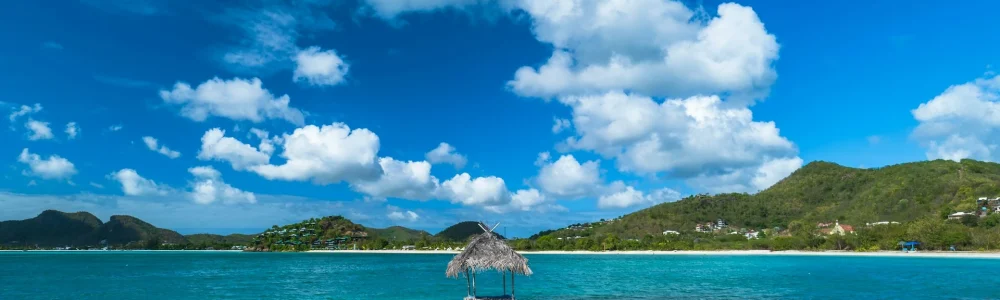
As one of the favorable tax systems, Antigua and Barbuda has zero personal income tax, capital gains tax, or inheritance tax. However, you can expect to be liable to taxation on corporations, consumption, and property.
The corporate tax has a flat rate of 35% that applies to profits of all resident and non-resident companies that source their income in Antigua and Barbuda. However, in specific sectors such as commercial banks, insurance companies, oil companies, and telecommunications companies, you can benefit from tax rates of 10% to 22.5%.
The other tax rates include:
- Antigua and Barbuda Sales Tax: 15% (general rate), 12.5% (hotel/restaurant services), and essential items are often exempt or zero-rated.
- Property Tax: 0.1% to 0.5% of assessed land and real estate value.
- Withholding Tax: 25% on income sources from non-residents (e.g., dividends, interest, royalties).
- Stamp Duty: 7.5% (seller) and 2.5% (buyer) on real estate transactions.
- Social Security Contributions: Paid by both employees and employers on employment income.
To be a tax resident in Antigua and Barbuda, you have to live in Antigua and Barbuda for more than 183 days in a tax year. Once you become a tax resident, you do not pay tax on your personal income, capital gains, wealth, or inheritance. To achieve this status, you can consider the fast-track Antigua and Barbuda citizenship by investment program with a minimum investment amount of $230,000.

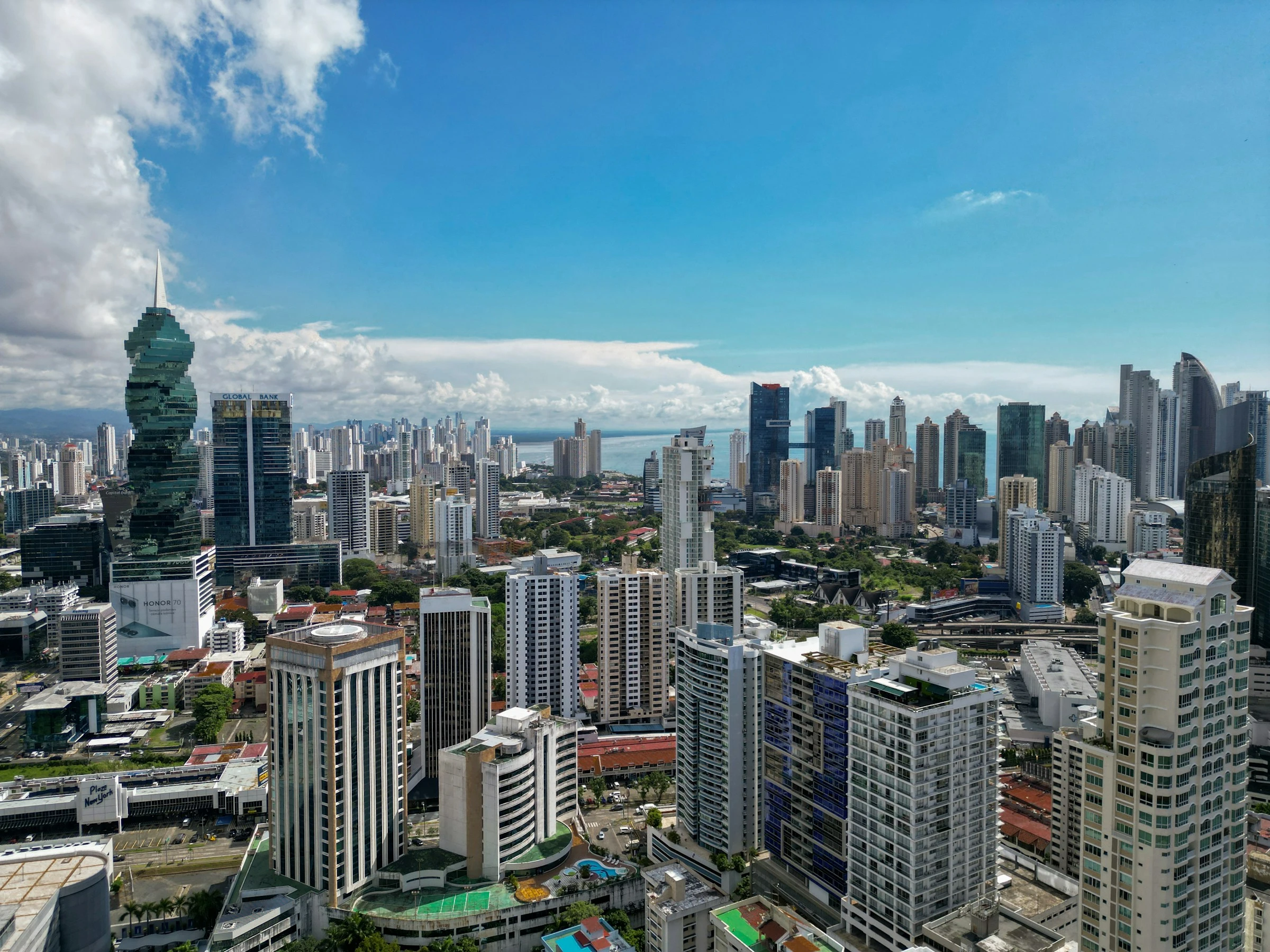
3. Panama
Regarded as a very secure pure tax haven, Panama offers one of the most attractive territorial tax systems in the world. The country only taxes the income earned within its territories. Offshore companies may operate inside or outside the country, and their owners, regardless of nationality, are not subject to income, corporate, or local taxes on foreign income. It also provides strong legal protection for the privacy of offshore trusts and foundations.
For individuals who do earn Panama-sourced income, personal income tax rates are low and simple:
- 0% on income up to USD $11,000
- 15% on income from $11,001 to $50,000
- 25% on income above $50,000
The standard corporate income tax rate is 25%, but only Panama-sourced net income is subject to taxation, as we stated above. Dividends are also taxed favorably, only 10% on Panama-sourced profits and 5% on dividends from foreign or export profits.
In addition to its tax advantages, Panama offers straightforward residency pathways for investors. Through programs such as the Qualified Investor Program, you can obtain residency by investing a minimum $300,000 in Panamanian real estate.
4. British Virgin Islands
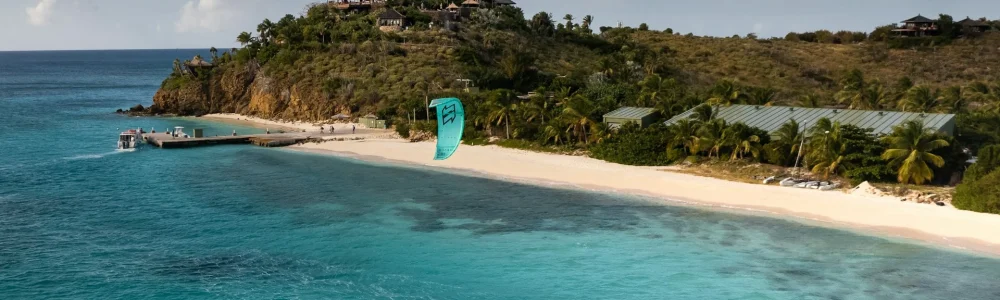
As one of the British overseas territories, the British Virgin Islands is internationally recognized as an offshore tax haven. It has developed into a premier tax-neutral jurisdiction. According to the Caribbean jurisdictions, it imposes no personal income tax, corporate tax, capital gains tax, or withholding tax.
Instead of these, the government get its revenue mostly from annual company fees and indirect taxes. However, there is a payroll tax. The structure is predictable and straightforward:
- The first USD $10,000 of annual income is completely exempt.
- Employers fall into two categories, paying either 10% (small employers) or 14% (all others) on total employee remuneration.
- Accordingly, employees typically bear 8% of that amount through payroll deductions, with the remainder paid by the employer.
For companies, the British Virgin Islands provides a fully tax-neutral platform. Business Companies do not pay tax on worldwide income, dividends, interest, or capital gains, as long as they do not hold direct ownership of British Virgin Islands’ property. On the other hand, each company pays an annual government fee. This is usually between USD $550 and $1,350, depending on authorized share capital.
Beyond this, local taxation is limited. Property tax applies to land and buildings. Stamp duty is charged on land and property transactions at 4% for Belongers and 12% for non-Belongers.
5. Dominica
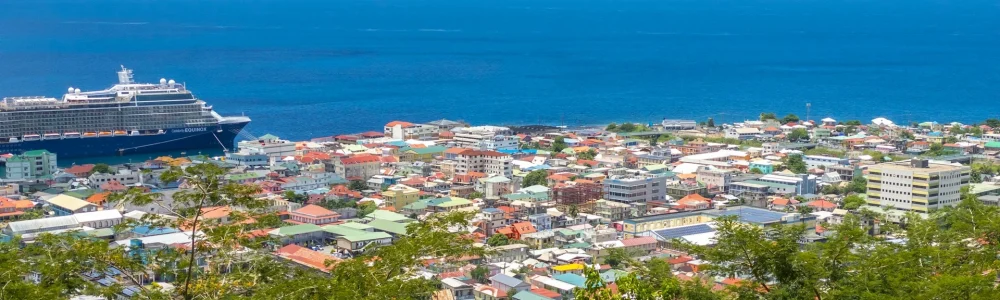
Compared to pure tax-neutral jurisdictions, Dominica follows a more traditional tax framework. Yet, it still remains competitive due to the absence of capital gains, inheritance, wealth, and gift taxes. To be a tax resident, you must live in Dominica for more than 182 days in a year.
Dominica has a progressive personal income tax system. Accordingly, if you become a tax resident, you will be subject to tax on global income. On the other hand, if you remain a non-resident, you must pay tax only on income sourced in Dominica. The structure is as follows:
- 15% on the first EC$20,000
- 25% on the next EC$30,000
- 35% on all income above that level
Residents benefit from a standard EC$30,000 tax-free allowance, and importantly, income derived from real estate sales is fully exempt from personal income tax.
For companies, Dominica applies a 25% corporate income tax on the worldwide profits of resident entities. On the other hand, non-resident companies are taxed solely on profits attributable to Dominica.
Beyond its favorable tax regime, the country is internationally known for its longstanding Dominica Citizenship by Investment program. You can gain citizenship by contributing to the Economic Diversification Fund or through approved real estate investments. The program is valued for its affordability, thorough due diligence, and global mobility benefits.

6. Cayman Islands
As one of the best Caribbean Islands to live in, the Cayman Islands is among the most preferred countries for offshore banking, as it imposes no taxes on individuals or companies. That’s why the Cayman Islands has become a leading tax jurisdiction for international business, investment funds, and asset protection, making it a pure tax haven.
Similar to many Caribbean tax havens, there is no personal income tax, no corporate income tax, no capital gains tax, and no withholding tax on dividends, interest, or royalties. Moreover, there are also no annual property taxes, no payroll taxes, and no inheritance, estate, or gift taxes. Additionally, the territory does not apply VAT or any sales tax.

7. Anguilla
To get rid of the tax burden on your shoulders, you can also consider Anguilla for its tax-free benefits. There are no personal, corporate, capital gains, or inheritance taxes in Anguilla’s tax system.
For individuals and businesses alike, the lack of direct taxes is one of Anguilla’s defining tax benefits. There is no personal income tax for residents or non-residents, and no corporate tax for most business activities conducted through Anguillian entities.
Moreover, through the territory’s Tax Residency Program, qualifying applicants can obtain Anguillian tax residency by purchasing approved property valued at a minimum of $400,000 and making an annual lump-sum tax payment of $75,000, among other requirements. Thus, it offers a recognized option for individuals seeking a stable and low-tax domicile.

8. The Bahamas
The Bahamas keeps its position as one of the most recognized Caribbean tax havens. Similarly, there is no personal income tax, corporate income tax, capital gains tax, inheritance tax, or wealth tax. Many people from the US and Europe use the country for offshore banking, company formation, trusts, and ship registration. Moreover, thanks to its stable and private financial system, it is an attractive spot for those for managing and protecting wealth.
In other words, The Bahamas collects money mainly through VAT, import duties, property taxes, and business license fees. In late 2024, a new minimum tax of 15% will be introduced, primarily affecting large multinationals. However, many investors and offshore businesses remain unaffected.

9. Belize
Among the other Caribbean tax havens, Belize is a popular jurisdiction for offshore banking, company incorporation, and the establishment of trusts or foundations. Proving this, companies and trusts incorporated in Belize are exempt from taxes on income earned abroad, and stamp duty does not apply to these entities.
Offshore bank accounts are also tax-free on interest, with no capital gains or repatriation taxes. The country also allows companies and trusts to be structured with nominee directors or shareholders.
Thus, privacy and security have become the key features of Belize’s financial system. Bank account information can only be disclosed by court order in connection with a criminal investigation.
10. Barbados
Barbados is known for its vibrant offshore sector, which includes banking, exempt insurance, and the registration of international companies. In general, you can see offshore entities enjoy a very low tax regime, with corporate taxes usually ranging from 0% to 5.5%. This decreases as profits grow. Moreover, companies can import machinery or business equipment without paying duties, making operations more efficient.
Additionally, Barbados has double taxation agreements with countries such as the US and Canada, providing additional flexibility for international businesses.
Get Golden Visa: Your Guide to Caribbean Citizenship by Investment
Get Golden Visa is a trusted, global mobility consultancy firm specializing in Caribbean Citizenship-by-Investment programs. We guide investors through every step and help you secure a second passport, enjoy tax benefits, and access global mobility with confidence.
Take the first step today, fill out the form below, and our experts will help you start your journey.
Contact Form
FAQs on Tax-Free Caribbean Islands
What Caribbean countries are considered tax havens?
Islands such as the Cayman Islands, the British Virgin Islands, Anguilla, the Bahamas, and Belize are known as tax havens because they offer very low or no personal and corporate taxes.
Are Tax Havens Illegal?
No, it is not. Using a tax haven is entirely legal as long as you follow the laws of your home country.
What is the difference between tax avoidance and tax evasion?
Tax avoidance is legal planning to reduce taxes, while tax evasion is illegal and involves hiding income or lying on tax returns.
Can you avoid taxes through Caribbean citizenship by investment?
Citizenship itself does not automatically eliminate taxes, but many Caribbean countries allow tax benefits for income earned abroad.
Which Caribbean island has the lowest taxes?
Islands like Cayman, the British Virgin Islands, and Anguilla have the lowest tax rates, with no personal or corporate income taxes for most residents and businesses.
What island has no income tax?
The Cayman Islands, Bahamas, Anguilla, and British Virgin Islands have zero personal income tax.
What are the tax-free islands in the Caribbean?
The primary locations are the Cayman Islands, BVI, Anguilla, Bahamas, and Belize, all of which have little to no direct taxes.
Which Caribbean island has no property tax?
The Cayman Islands and British Virgin Islands typically do not levy annual property taxes, although certain islands might impose minor municipal or stamp duties on property transfers.