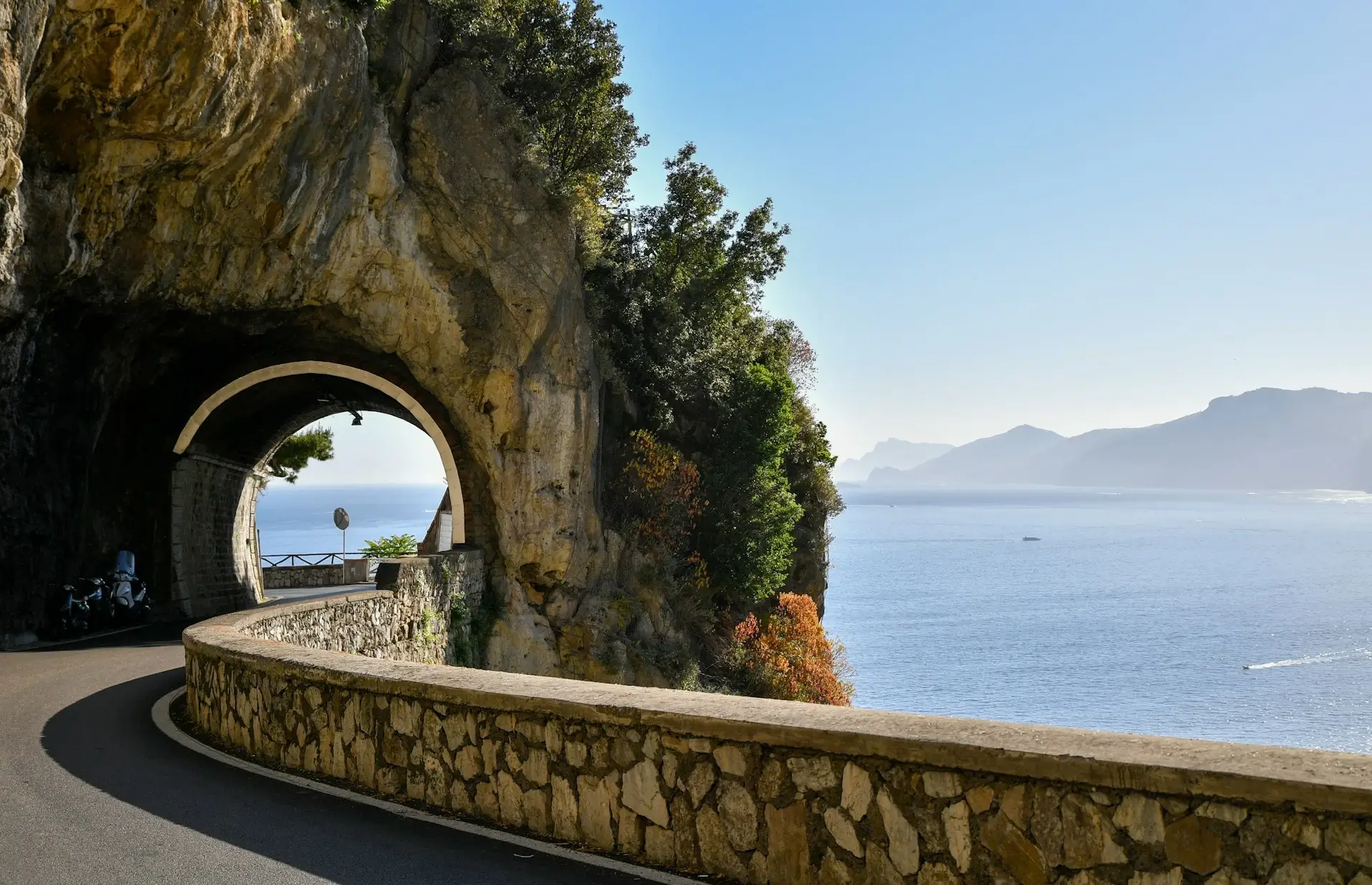


‘Moving to Portugal as an expat’ has become one of the most appealing choices in recent years. With its affordable lifestyle, welcoming communities, and Mediterranean climate, Portugal consistently ranks among the safest and most peaceful countries in the world, currently ‘#3 globally in safety’ and ‘#4 in peace’, according to the Global Peace Index.
Whether you’re drawn by the sun-soaked beaches of the Algarve, the historic charm of Lisbon and Porto, or the relaxed pace of life, ‘Portugal offers a unique blend of European culture and expat-friendly living conditions’. That’s why thousands of ‘digital nomads, retirees, and remote workers’ are moving to Portugal each year.
What to Discover in This Guide?
Find Your Portugal Residency Option
Answer a few quick questions to discover which Portuguese residency route may best match your profile.
You might be eligible for this
Pros and Cons of Living in Portugal as an Expat
Wondering if Portugal is the right fit for your expat journey? Here’s a quick look at the advantages and challenges of living in Portugal as a foreigner.
Pros of Living in Portugal
- Climate Conditions: Excellent climate with over 300 days of sunshine, especially in the Algarve
- Cost of Living: Affordable cost of living compared to the US, UK, and most of Western Europe
- Safety: Low crime rates and a welcoming, peaceful culture.
- Healthcare: Access to universal healthcare and affordable private options
- Location Opportunities: Strategic location in Europe with quick access to Spain, France, and the rest of the EU
- Expat Community: Growing digital nomad and retiree communities
- Investment Options: Real estate investment opportunities and property ownership rights for foreigners
- Banking Procedures for Expats in Portugal: If you are going to Portugal as an expat, it is an understandable process to open a bank account there. We can say that having a local bank account in Portugal makes your everyday transactions easier and helps you manage your finances better.
- Tax Benefits for Expats: Portugal’s IFICI tax regime offers major tax benefits to new residents, including a flat 20% income tax rate for qualifying professions and exemptions on foreign income like dividends and rental earnings. Available for up to 10 consecutive years, the IFICI program is a key incentive for expats seeking tax-efficient residency in Portugal.
- Education Options: Portugal offers a strong education system with both public and private options, including many international schools. Expats can choose from French, German, American, and British curricula, while recent government investments have improved public school quality and graduation rates.
Cons of Living in Portugal
- Bureaucracy & Formal Processes: Bureaucracy can be slow and paperwork-heavy, especially during immigration and banking processes.
- Network & Professional Opportunities: The job market is limited in many sectors unless you’re fluent in Portuguese or work remotely.
- Language: Language barrier outside of major cities; English is not always spoken in local municipalities.
- Healthcare & Other Public Services: Public sector services (e.g., postal, healthcare wait times) can lack efficiency compared to other EU countries.
- Tip: Most of the cons are manageable, especially if you’re prepared, patient, and open to learning Portuguese.
- LGBTQ+ Friendly: Portugal’s LGBTQ friendliness stands out as it grants LGBTQ couples in Portugal the same rights as heterosexual couples regarding marriage laws, visas, inheritance, adoption, and IVF.
The Cost of Living for Portugal Expats (Updated 2026 List)
Rent Costs and Property Prices in Portugal
Rent Prices in Portugal
Other than the expensive cities mentioned above, you can find that for a two-bedroom apartment, the rent costs are between €900 and €1,500 per month throughout the country. An apartment without furniture is even cheaper to rent.
However, if you wish to get a bit more luxurious service with your family, then you should expect the rent to cost between €1,800 and €3,000+ per month for an apartment. Renting a mid-range apartment in the country is also a very reasonable expense when you compare it to other Western European countries.
Property Prices in Portugal
In the Portuguese real estate market, the price of an apartment changes depending on the location within the country. In the Algarve, a one-bedroom apartment is between €200,000 and €350,000+. In Lisbon, on the other hand, the price of a one-bedroom apartment would range between €300,000 and €550,000+, depending on the location.
Food and Groceries
Food is generally very affordable in Portugal, especially fruits, vegetables, fish, and meat.
For groceries, a monthly budget of €250-400 will be more than enough, including even some luxuries. Because of its location near the sea, fish prices are also reasonable at around €6-10. The cost of meat is around €8-12, and chicken is around €7.20. You can find some other costs of various grocery items in the table below:
| Item | Price (EUR) |
|---|---|
| Apple (one kg) | €2.10 |
| Banana (one kg) | €1.35 |
| Chicken (one kg) | €7.20 |
| A dozen eggs | €3.30 |
| A loaf of bread (500 g) | €1.45 |
| Local Cheese (one kg) | €10.50 |
| Milk (one liter) | €1.00 |
| Onions (one kg) | €1.75 |
| Potatoes (one kg) | €1.50 |
| Rice (one kg) | €1.50 – €2.00 |
| Water bottle (1.5 liters) | €0.70 |
In addition to these, the cost of good wine in Portugal is under €10, and on average, it costs around €5-10. But that doesn’t mean that it lacks rare wines. There are, in fact, some rare and old wines that can cost as much as several thousand Euros. Finally, You can find a bottle of beer starting from €1.
Eating Out in Portugal
You can see the approximate costs of eating outside below:
| Item | Price (EUR) |
|---|---|
| Meal at an inexpensive restaurant | €12 - €15 |
| Meal for two at a mid-range restaurant | €45 - €60 |
| Meal at a fast-food chain | €8 - €10 |
| Beer | €2.50 - €3.50 |
| Water bottle | €1.00 - €1.50 |
In general, lunch will cost around €12-20, and fast food around €8-10. If you eat in a more luxurious place, the price will be about €40-60+ per person.
Utilities
Below you can find the average monthly utility costs in Portugal. Please note that the monthly prices may vary depending on how much you use them in a month and how big your house is.
| Service | Price (EUR) |
|---|---|
| Basic (Electricity, Heating, Cooling, Water, Garbage) for 85m² Apartment | €120 - €160 |
| Mobile Phone Monthly Plan with Calls & Internet (10 GB) | €15 - €25 |
| Internet (60 Mbps or More, Unlimited Data, Cable/ADSL) | €30 - €40 |
Transportation
If you’re living in Portugal, you can see that buses are the most widely-used public transportation there. The cost of bus tickets ranges from €2 to €7. Most locations in Portugal can only be accessed by bus. Intercity buses are available in most cities as well.
Furthermore, in the districts of Lisbon and Porto, you can also find metro lines. These networks connect the city centers to the near neighborhoods and municipalities. There is also a tram line in these two cities. Most metro tickets cost around €1.80 – €3. Monthly passes are between €30 and €40.
Additionally, there are train lines in Lisbon, Porto, and Coimbra as well. These are the urban lines, and there are also several regional trains. The regional trains connect cities nearby. There is also the line called The Alfa Pendular, which connects the main cities throughout the country.
Finally, in Portugal, you can find affordable taxi fees as well as alternatives to it, such as Uber, Cabify, and MyTaxi. The average taxi fee in Portugal starts at around €3.50-4 and increases at a rate of €0.50-0.80 per kilometer.
Education
In Portugal, basic education (9 years) is free for the residents (including citizens and foreign residents). However, if you opt for a private school, you have to pay a considerable amount of money.
In private schools in Portugal, you will pay an average of €500-1,000+ per month from primary to high school, in addition to enrolment and book fees.
There is also the option of international schools. The average fee for these schools is around €800-2,000+ a month(this varies according to the school), in addition to enrolment fees and other related fees (books, uniforms, etc.).
Public universities are cheaper than private universities. For public universities in Portugal, there is a fee limit that changes every year. As of the 2025/26 academic year, the maximum fee is €697.
The fee for each private university is different. However, average private universities in Portugal cost €3,000-8,000+ a year.
Healthcare and Social Security
Public healthcare in Portugal is almost free, with a low cost for citizens and legal residents. Only a few procedures require a small fee. These procedures may include visiting the emergency room, visiting the family doctor, taking a diagnostics examination, or going to certain doctor appointments. The fee for these procedures in Portugal is between €5-20. The exams will typically cost no more than €40.
In Portugal, private healthcare is more expensive than public one. You will pay an average of €50-100 for a doctor’s appointment if you have private health care.
Health Insurance
Prices for private health insurance may change depending on your choice of insurance plan. There are many different health insurance plans in Portugal, so it is essential to choose the one which meets your needs.
On average, the prices of private insurance are around €300-1,000+ a year. And, when you choose a more comprehensive insurance plan, the prices can go as high as €1,000-1,500+.
Social Security in Portugal
The Portuguese social security system gives you certain benefits regarding unemployment, occupational diseases, invalidity, maternity, pension, and death. If you are registered with the social security system in Portugal, you pay your contribution from your salary. The amount received from your gross earnings is 11%. Also, your employer pays a further 23.75% a month.
In the case of self-employment, you pay 21.4% of your declared income each month.
Bank Accounts and Money Transfers
When you’re living in Portugal, most banks charge you a monthly fee for your bank account, which is between €0-10. They also charge you on your credit cards, overdrafts, loans, and mortgages. These types of fees change depending on your bank, card, and so on.
For international money transfers, fees vary depending on the bank, destination, currency, transfer method, and amount.
If you have a bank account in a currency other than Euro, you can use Wise or a currency broker to convert your money in Portugal.
Living in Portugal vs the US: 2026 Cost of Living Breakdown
| Expense Category | Updated Average Monthly Cost | Notes / Comparison |
|---|---|---|
| Groceries (single person) | €250 – €400 | ~30–38% cheaper vs. USA |
| Dining Out (mid-range) | €20 – €30 per meal | ~32–39% cheaper vs. USA |
| Utilities (85 m² apartment) | €120 – €160 | ~38% cheaper vs. USA |
| Internet & Mobile | Internet: €30–€40; Mobile: €15–€25 | Internet ~41–63% cheaper vs. USA |
| Public Transport Pass | €30 – €40 | ~30% cheaper vs. USA |
| One-way Bus/Metro Ticket | €1.80 – €3 | — |
| Rent – 1BR (outside Lisbon) | €800 – €1,100 | ~€900–€1,000 in Porto |
| Rent – 1BR (Lisbon center) | €1,200 – €1,600 | Lisbon average ~€1,300–€1,400 |
How to Move to Portugal: Portugal Residency for Non-EU Citizens
If you’re a non-EU citizen planning to move to Portugal, there are several residency options available that can lead to permanent residency and even citizenship. Portugal remains one of the most accessible countries in Europe for expats seeking a long-term home.
Portugal Golden Visa Program
The Portugal Golden Passport is a popular residency-by-investment program that offers non-EU citizens the chance to live, work, and study in Portugal-with the added bonus of visa-free travel within the Schengen Area.
By investing in approved funds or projects in Portugal, you can secure a 5-year residency permit with minimal stay requirements-just 7 days per year on average.
One of the most popular routes is through investment funds, where the minimum threshold starts at €500,000.
You can apply for the Golden Visa if you:
- Are a non-EU/EEA or Swiss citizen
- Are at least 18 years old
- Have a clean criminal record
- Make a qualifying investment (e.g., venture capital funds, R&D, company shares)
You can also apply for Portuguese citizenship after 10 years, starting from the date of your initial application, not just approval.
Portugal D7 Residency Visa
The Portugal D7 Visa, also known as the Passive Income Visa or Retirement Visa, is a residency route designed for non-EU citizens who can demonstrate a stable source of passive income. It’s especially popular among retirees and financially independent expats looking to enjoy Portugal’s high quality of life, pleasant climate, and affordable cost of living.
This visa is ideal for individuals who:
- Are retired with a regular pension
- Receive rental income, dividends, or other passive earnings
- Are not actively employed, but can support themselves financially
- can prove that you have a minimum passive income of €920 per month (approximately €11,040 per year). If you have dependents, the sum increases. You are expected to demonstrate €1.380 for a spouse and €1.196 for each dependent child per month.
The main advantages of the D7 Visa:
- Eligible for permanent residency after 5 years
- Option to apply for Portuguese citizenship after 10 years
- Access to public healthcare (SNS) and education
- Freedom to travel within the Schengen Zone
- No investment required
Note: A minimum stay requirement applies. You must spend at least 183 days per year in Portugal (or prove you have a habitual residence).
Portugal Digital Nomad Visa (D8 Visa)
The Portugal Digital Nomad Visa, officially known as the D8 Visa, is a newly launched residency option designed for remote workers and freelancers who earn active income from clients or employers based outside Portugal.
This visa offers following key benefits:
- Legal residency in Portugal with access to public services
- Eligibility to bring family members
- Path to permanent residency after 5 and citizenship after 10 years
- Full access to Portugal’s public healthcare system (SNS)
- Freedom to travel across the Schengen Area
You can apply for the Digital Nomad Visa if you:
- Work remotely for a non-Portuguese company or clients
- Are self-employed or a freelancer
- Can prove a monthly income of four times Portugal’s updated minimum wage. As of 2026, this corresponds to €3,680 per month for the main applicant, with a 50% increase for a spouse and a 30% increase for each dependent child.
Income can come from:
- A fixed employment contract
- Freelance/consulting clients
- Company dividends, if actively involved
Portuguese Citizenship for Expats
Many expats who move to Portugal eventually aim to become Portuguese citizens, gaining the right to live, work, and travel freely throughout the European Union. You can apply for citizenship by descent, naturalization, marriage, or investment.
* Portuguese citizenship eligibility, timelines, and naturalization requirements are governed by nationality law and related legal interpretation, which are separate from the Golden Visa residency framework. This content is provided for informational purposes only and reflects the information available at the time of publication. It should not be construed as legal advice or as a guarantee of eligibility, approval, processing timeline, or future citizenship outcome. Laws, regulations, administrative practices and legal interpretations may evolve over time, and applicants should consult a qualified legal advisor to understand the implications of any current or potential regulatory changes before making decisions.
Portuguese Citizenship by Natualization
You can apply for Portuguese citizenship after legally residing in the country for 10 years. This applies to most residency types, including:
- Golden Visa holders (by spending only seven days per year.)
- D7 Passive Income Visa holders (by spending 183 days per year.)
- D8 Digital Nomad Visa holders (by spending 183 days per year.)
- Residents with work or family visas (by spending 183 days per year.)
General Requirements for Expats
To apply for citizenship, you must:
- Have legally resided in Portugal for at least 10 years
- Hold a valid residence permit
- Demonstrate basic proficiency in Portuguese (A2 level)
- Have no serious criminal record
- Show ties to the Portuguese community (e.g., through employment, property, or integration)
Citizenship by Investment (Golden Visa)
If you’re a Portugal Golden Visa holder, you can be eligible to apply for citizenship 10 years from the date of your issuance of your initial residency card. To achieve that, you must spend only 7 days in Portugal per year.
Compared to other Golden Visa countries, Portugal’s unique value is its minimum stay requirement for citizenship path.
Citizenship by Descent
You may also qualify for Portuguese citizenship if you have:
- A parent or grandparent born in Portugal
- Proof of direct lineage and family ties
This route does not require residency in Portugal and follows a different legal process.
Citizenship by Marriage
You can qualify for Portugal citizenship by marriage if you meet the following requirements.
- Married to a Portuguese citizen for more than 3 years.
- Marriage must still be valid.
- Provide marriage certificate and birth certificate.
- Provide passport/ID and criminal-record certificates.
- No applicable legal grounds preventing acquisition of nationality.
- Application can generally be made from Portugal or abroad.
Does Portugal Allow Dual Citizenship?
Portugal allows dual citizenship, meaning you can keep your original nationality if your home country also permits it. This provides added flexibility for expats who want to maintain strong ties to both countries. However, you should also check if your country of origin allows you to do so.
Becoming a Portuguese citizen means more than just a passport; it opens the door to EU rights, universal healthcare, and visa-free travel to over 180 countries. Whether you’re investing, retiring, or working remotely, Portugal makes naturalization a realistic and achievable goal for expats.
American Expats in Portugal
American expats also prefer Portugal’s high-quality life, climate, and relaxed lifestyle. American expats mostly prefer Lisbon, the capital city of Portugal. It became a hub for American expatriates and digital nomads. Porto, Algarve, and Cascais follow the preferences of American’s Portugal expat life.
As a US citizen, you can obtain permanent residency in Portugal having a reasonable salary from outside of Portugal or passive income. So you can be eligible for Portugal’s D7 or D8 Visa options.
When it comes to taxes, you need to file both US taxes and Portugal taxes while living in Portugal. Portugal comes forward with the cost of living expenses as well. It is one of the most affordable countries located in Western Europe. Living in Portugal is around 40% cheaper than living in the US.
British Expats in Portugal
If you are from the UK, you can apply for the Portugal Golden Visa or other visa types, such as D7 and D8, in Portugal, depending on your situation.
Portugal has been a major holiday destination for British citizens and many expats, an attraction to discover. British citizens who prefer to buy property in Portugal chose the Algarve for many years, especially when it’s an approach to retirement.
Language is one of the factors when expats chose a destination to reside. For example, in Portugal, Porto comes forward with English being the best spoken in this city. The cost of living comparison ends with Portugal being more advantagous for the Brits. Local purchasing pwoer in the UK is around 90% higher than in Portugal when compaerd. So, without a doubt, Portugal is a lot cheaper than the UK.
Retiring to Portugal
Retirees prefer discovering Portugal as it offers affordable living, a pleasant climate with beautiful nature and a relaxed lifestyle. D7 Visa is actually a specific retirement visa and is available if you can prove that you have a pension that provides sufficient passive income for you.
A monthly budget of $1,500 to $2,000 is sufficient for a pleasant living for retiring in Portugal, although life in a metropolis such as Porto or Lisbon may necessitate a little more income, about $2,500 to $3,000.
Where to Live in Portugal: Best Cities for Expats
Portugal offers a wide range of options for expats-from vibrant capital cities to peaceful coastal towns. Whether you’re a retiree, remote worker, or relocating with your family, here are some of the best places to live in Portugal:
1. Lisbon
Population: 658,236
The capital city of Portugal, Lisbon, is a UNESCO World Heritage Site and is one of the favorite options for foreigners because of its culture, history, and metropolitan city life.
Due to the robust real estate market in Lisbon, many options for properties are available for purchase.
Universidade de Lisboa, also called ULisboa, is the largest university in Portugal. Also, it is the most prestigious university in the country and a major university in Europe. Living in Lisbon, with its wonderful environment, high standards, and economic prospects, combined with its nice weather, all entice Americans to relocate there.
2. Porto
Population: 273,476
Renowned for its rich history and wine, Porto draws foreigners to live in Portugal with its thriving real estate market, lively culture, low cost of living, and great employment prospects. Prospective purchasers can find out various possibilities in Porto.
3. The Algarve
Population: 578,032
The Algarve is situated in the southern part of Portugal. The city is known as the Algarve region. If you are wondering about accommodation in Algarve, remember that Portugal’s real estate market is diverse, and there are many alternatives. It is one of the Portuguese cities drawing in Americans with its lovely beaches, pleasant climate, and reasonably priced cost of living.
4. Faro
Population: 80,256
The historic city Faro is also in the Algarve region. The marina and historic old town in Faro is worth visiting and for some, moving to Portugal. Some also consider many places in this city as tourist attractions. The real estate market is busy in Faro, and there are a variety of properties available. Americans also are attracted to the warm climate in this city and the affordable city life compared to the one in the US.
5. Aveiro
Population: 91,397
Aveiro, or the “Venice of Portugal,” enables visitors to discover its canals, boats, and traditional architecture. The strong real estate market will help you find accommodation of your taste and budget as there are various properties to purchase.
6. Cascais
Population: 242,619
Are you a summer person associated with lovely beaches? Cascais may be your place with sandy beaches and a busy marina. Properties for sale in Cascais can be found close to those lovely beaches that are not that far away from the city life of Lisbon.
7. Braga
Population: 212,635
Braga has many historic buildings and is known for its religious heritage. As long as excellent job opportunities, there are affordable living cost opportunities as well, in addition to the lively real estate market.
8. Chaves
Population: 38,014
Every city has its own character and top activity. When it comes to Chaves, the historic city in Northern Portugal is known for its thermal springs and fortifications. Chaves, a historic city in northern Portugal, is renowned for its thermal springs and fortifications.
9. Coimbra
Population: 156,359
Coimbra is a central Portugal riverfront city. Its historic University of Coimbra and strong real estate market make it a great choice for many foreigners and visitors. The prestigious university may be a reason for students and families to move to Coimbra.
10. Setúbal
Population: 141,266
Setúbal is on the Sado River’s northern bank, a perfect spot for its fishing activities and natural beauty. If you are looking for the natural beauty in the view of your property, this city can be your choice.
11. Évora
Population:58,567
Évora is a UNESCO World Heritage site in southern Portugal. The well-preserved old town amazes visitors. And the real estate market is associated with it. The rich history in this Portuguese city may attract you if you are especially interested in historical places.
Why Portugal Is a Top Expat Destination?
Portugal continues to stand out as one of the most attractive destinations for expats worldwide. Its combination of mild climate, safety, affordability, healthcare, and EU access makes it especially appealing to retirees, remote workers, and families alike.
Ready to start your expat journey? Portugal may just be the best decision you’ll ever make.
Contact Form
Frequently Asked Questions on Living in Portugal
Where do most expats live in Portugal?
The most popular destinations for expats include Lisbon, Porto, Cascais, and the Algarve. These regions offer international communities, modern amenities, and a high quality of life.
Is healthcare free in Portugal?
Public healthcare is subsidized but not entirely free. Legal residents have access to the public system (SNS) with low-cost services. Private health insurance is also available starting from €30 per month.
Do people speak English in Portugal?
English is widely spoken in urban and tourist areas such as Lisbon, Porto, and Cascais. In smaller towns and rural regions, basic Portuguese may be necessary for daily interactions.
Can expats buy property in Portugal?
Yes, there are no restrictions on foreign property ownership in Portugal. Expats can purchase apartments, houses, land, or commercial properties freely.